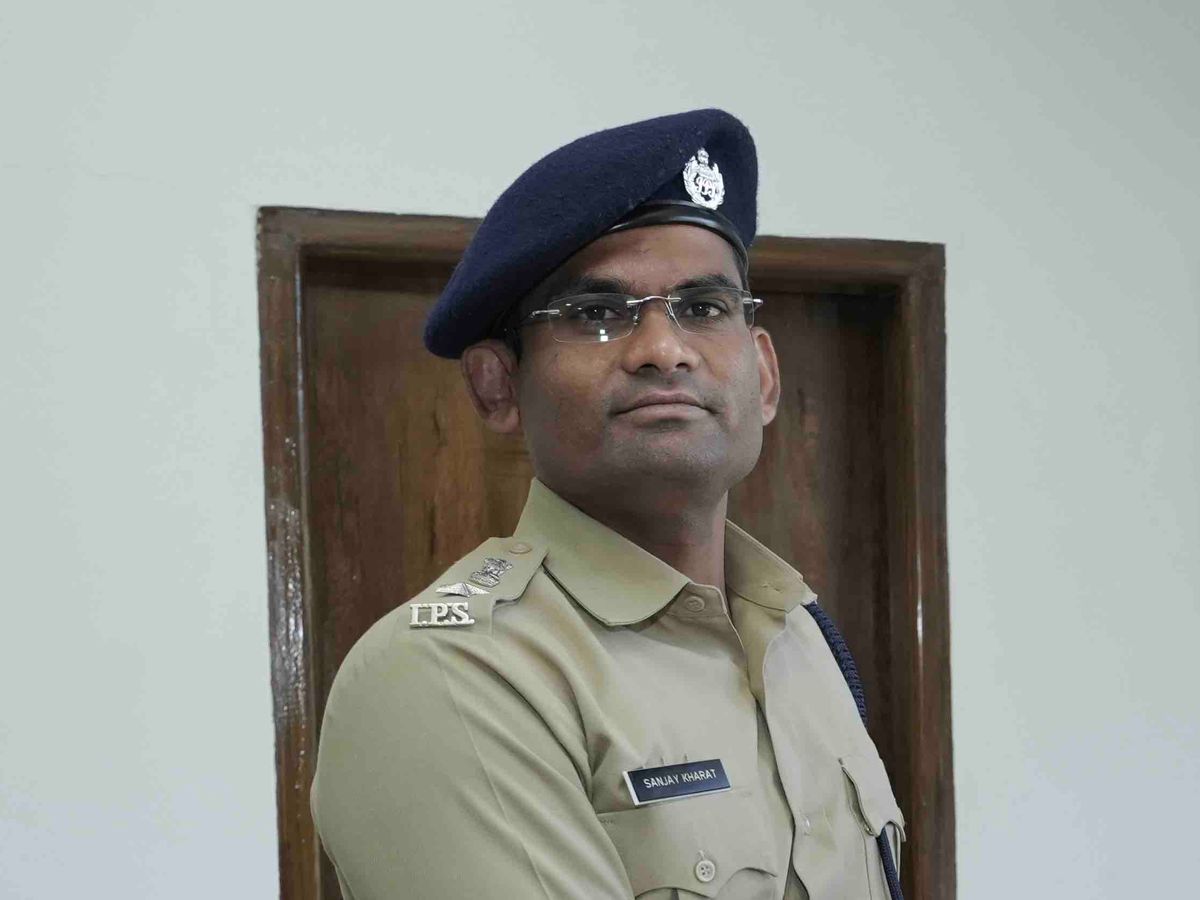
In service dress, bearing the I.P.S. shoulder title of the Indian Police Service.
01
The record, stated plainly
Service
Indian Police Service
Appointed to the Gujarat cadre with the 2014 batch. The full name entered in service listings is Sanjay Dnyanadeo Kharat.
Present appointment
Superintendent of Police, Amreli
Appointed to the district in December 2024 and carried in the Gujarat Police roll of I.P.S. officers as of 31 August 2025.
Ground covered
District, city, and case file
Postings recorded to date span sub-divisional charge in Junagadh, traffic administration in Ahmedabad City, district command in Aravalli, and economic-offence investigation with the CID (Crime) at Gandhinagar.
This site
A compiled public record
Every appointment named here is drawn from official Gujarat Police listings and published government transfer notifications. Nothing beyond that record is claimed.
02
Four kinds of work
The appointments on this record are not variations of one job. Each asks for a different instrument — and the officer who holds them in sequence learns to change instruments without changing standard.
01
District command
A Superintendent of Police carries the whole of a district: its police stations, its investigations, its public order, its recruitment and its complaints. The work is less about any single case than about whether the machinery beneath the office is functioning on an ordinary Tuesday.
02
The city in motion
Traffic administration in a city the size of Ahmedabad is policing at its most continuous. It is measured in junctions, signal timings, licensing, enforcement and the slow work of shifting habit — a portfolio where the public meets the police more often than anywhere else.
03
Economic offences
Investigating financial crime is patient, documentary work. It follows ledgers rather than footprints, and it answers to a standard of proof that must survive years of scrutiny. The specialist wings of the CID exist precisely because this evidence will not gather itself.
04
The public account
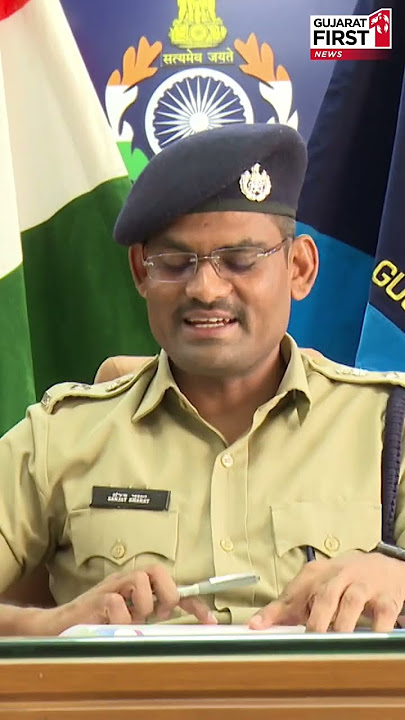
Much of the photographic record here shows the same act: an officer at a desk, on camera, explaining a decision. Briefings and interviews are not adjacent to the job. They are how a district learns what its police have done, and why.
Assistant Superintendent of Police — the sub-divisional charge where an I.P.S. officer first carries responsibility of their own.
2018
Ahmedabad City
Promoted to the Senior Time Scale and appointed Deputy Commissioner of Police, Traffic.
By 2022 — 2023
Aravalli
Superintendent of Police for the district, headquartered at Modasa.
2023 — 2024
Gandhinagar
Superintendent of Police, Anti-Economic Offences Wing, CID (Crime).
2024 —
Amreli
Superintendent of Police for the district; the appointment recorded in the current officer roll.
04 — At the desk
Most of policing is paperwork that matters.
The dramatic image of police work is the pursuit. The accurate one is a signature: an order passed, a file cleared, a transfer approved, a complaint marked for enquiry. A district is governed through documents, and the quality of those documents is the quality of the policing.
It is unglamorous by design. A charge sheet that holds together in court two years later was built at a desk, in ordinary hours, by someone who declined to leave a gap in it. So was a posting order that put a competent officer where they were needed.
02
Reviewing papers at the office desk, before departmental standards and the national flag.
05
A uniform is a promise that the same rules will be applied to the next person too.
That is the framing this site takes to the record that follows: not a list of triumphs, but an account of offices held and the duties that attach to them. What an officer is asked to do is a matter of public record. What that duty demands is worth setting down clearly.